Today's News
The Pragmatic Engineer
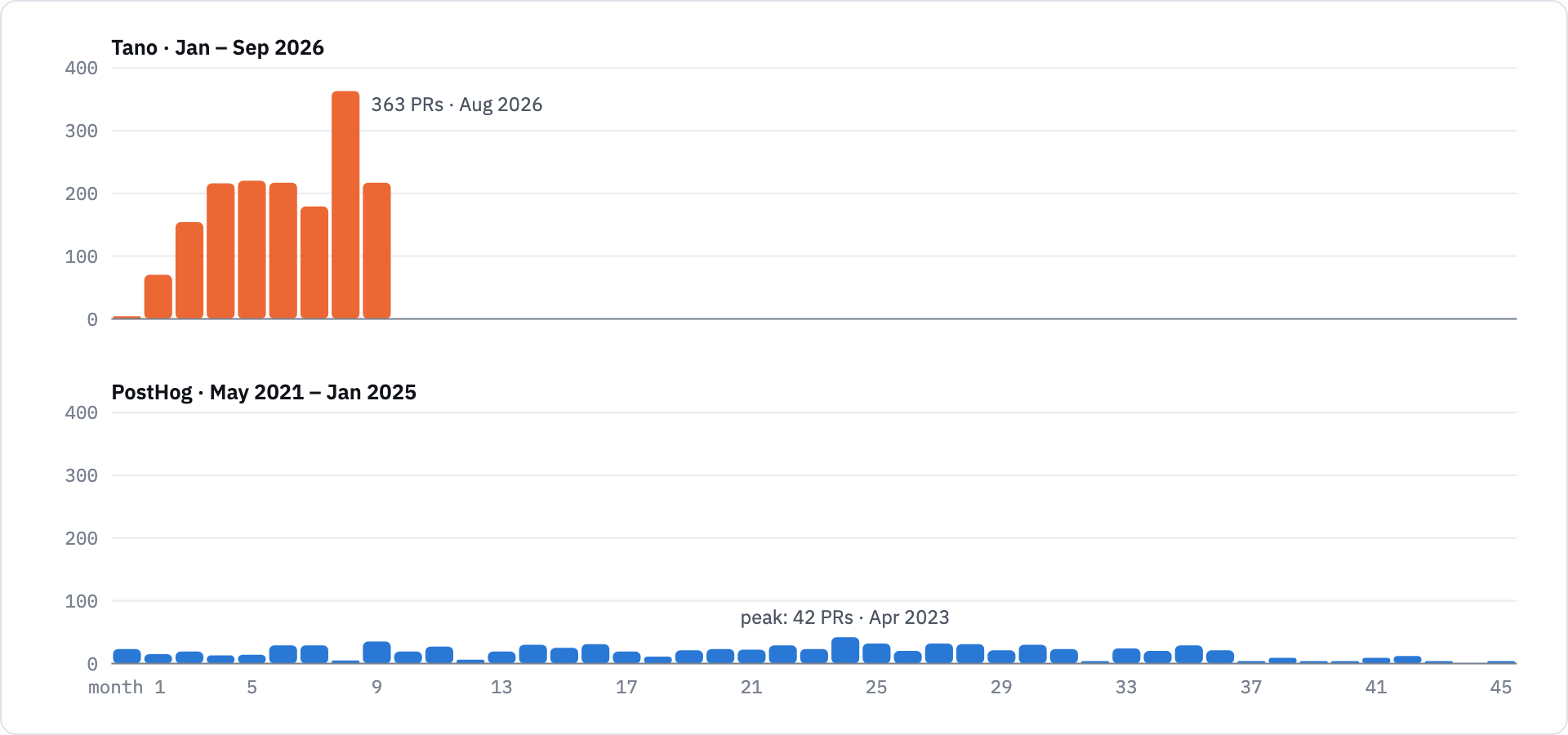
The Pragmatic Engineer's winning essay documents concrete metrics showing the productivity impact of AI-native development: a founding engineer at Tano shipped 24 projects in 8 months versus 17 projects over 4 years at PostHog, with median PR merge time under 1 hour compared to days at PostHog, and 6x lower revert rates despite skipping mandatory human code review. Tano replaced peer review with Claude-powered CI agents that catch most issues, accepting "move fast and break things" tradeoffs where bugs like currency calculation errors are fixed within hours post-deployment. This directly demonstrates infrastructure and productivity implications of AI-native development workflows at scale and signals a fundamental shift in how engineering culture and quality gates must adapt when AI handles code generation and initial review.
Techmeme
Google announced that schools blocking AI tools entirely will lose Search functionality in 2027, claiming "Search and AI are deeply integrated." This triggered immediate antitrust backlash from FTC Chair Khan and Senator Blumenthal, who accused the company of leveraging its search monopoly to coerce AI adoption. The move signals potential regulatory escalation around Google's market power and raises questions about how platform integration strategies interact with antitrust enforcement.
The timing coincides with accelerating competitive pressure: ChatGPT reached 1.2B weekly active users with 200M new WAUs added in two months, and ChatGPT's search queries have grown to approximately one-fifth of Google's volume. This metric underscores structural shifts in search behavior and validates the strategic importance of search integration that Google is now enforcing.
Benedict Evans
Markets are showing bipolar sentiment on AI infrastructure returns. Google reported that AI Overviews are impacting search revenue, OpenAI cut its fundraising target from $30B at $1.4T valuation to $20B at $1.25T valuation, and Meta faced a credit downgrade despite a $95B equity raise. These signals collectively suggest market worry that trillions in projected AI capex won't generate adequate returns, creating tension between the scale of infrastructure buildout and demonstrated monetization pathways.
The Defiant
The attackers posed as recruiters and company leadership to trick engineers into installing malicious code, then spent months escalating access before using an EIP-7702 delegation to drain a hot wallet on October 29. Binance had no cyber insurance and funded the recovery from its SAFU emergency fund, treasury, and futures insurance fund, with about $2.85 billion now frozen or intercepted.