Today's News
Techmeme
Alphabet's Q3 Search revenue growth decelerated to 12% YoY from 14.5%, with the company attributing the slowdown directly to lower monetization in its AI Mode product. The company disclosed $1T+ in purchase commitments and contingent obligations, and Alphabet's stock dropped 12.3% after reporting negative cash flow—a concrete signal that AI infrastructure buildout is straining near-term cash generation and that AI-integrated search may cannibalize higher-margin traditional search ads.
Meanwhile, Samsung's Q3 chip unit revenue hit ~$110B with HBM capacity sold out through 2027 and 10 long-term supply deals secured. The company expects capex to rise 60% to $63B in 2026, signaling extreme demand from AI hyperscalers and a fundamental shift in negotiating power toward chip suppliers. Together, these disclosures underscore the capital intensity and infrastructure bottleneck driving the AI hardware cycle—hyperscalers are burning cash on buildout while suppliers lock in multi-year commitments at premium terms.
Clouded Judgement by Jamin Ball
Anthropic's S-1 filing dispels the widely-cited narrative of massive operational losses. The company has burned only ~$7B across its lifetime despite raising $141B in total capital, with 85% gross margins and 21% free cash flow margins in H1 2026. The $81B net loss was entirely mark-to-market accounting on convertible notes issued years ago at lower valuations—not operational losses. Approximately $6B of the $109B "convertible notes payable" on the balance sheet reflects strategic investors' (Amazon and Google) promises to convert earlier capital into shares at historical prices; only ~$5B has converted to actual equity so far, with the remainder showing as a liability due to GAAP accounting rules. This represents a concrete signal about frontier lab unit economics and the distinction between accounting artifacts and real cash burn.
Lenny's Newsletter
Anthropic has replaced traditional annual planning with one-month cycles against three-to-six-month capability assumptions, a concrete operational signal about how product strategy must adapt to frontier model development velocity. The company abandoned annual OKRs because assumptions about adoption became obsolete within weeks as model capabilities advanced; only a few "stubborn" commitments survive monthly replanning.
Not Boring
OpenAI announced discoveries disproving the Exponential Time Hypothesis (that 3-SAT can't be solved faster than brute force) and producing a rigorous proof that interacting quantum field theories exist in four dimensions. Results were shared via "shepherds" (expert reviewers) on GitHub with Lean formalizations to ensure rigor, representing a shift toward reproducible AI-assisted mathematics and physics research. Complementary breakthroughs from Physical Superintelligence on quantum problems and Axiom's auto-formalization of the Classification of Finite Simple Groups signal emerging capability in formal reasoning and scientific discovery.
Not Boring
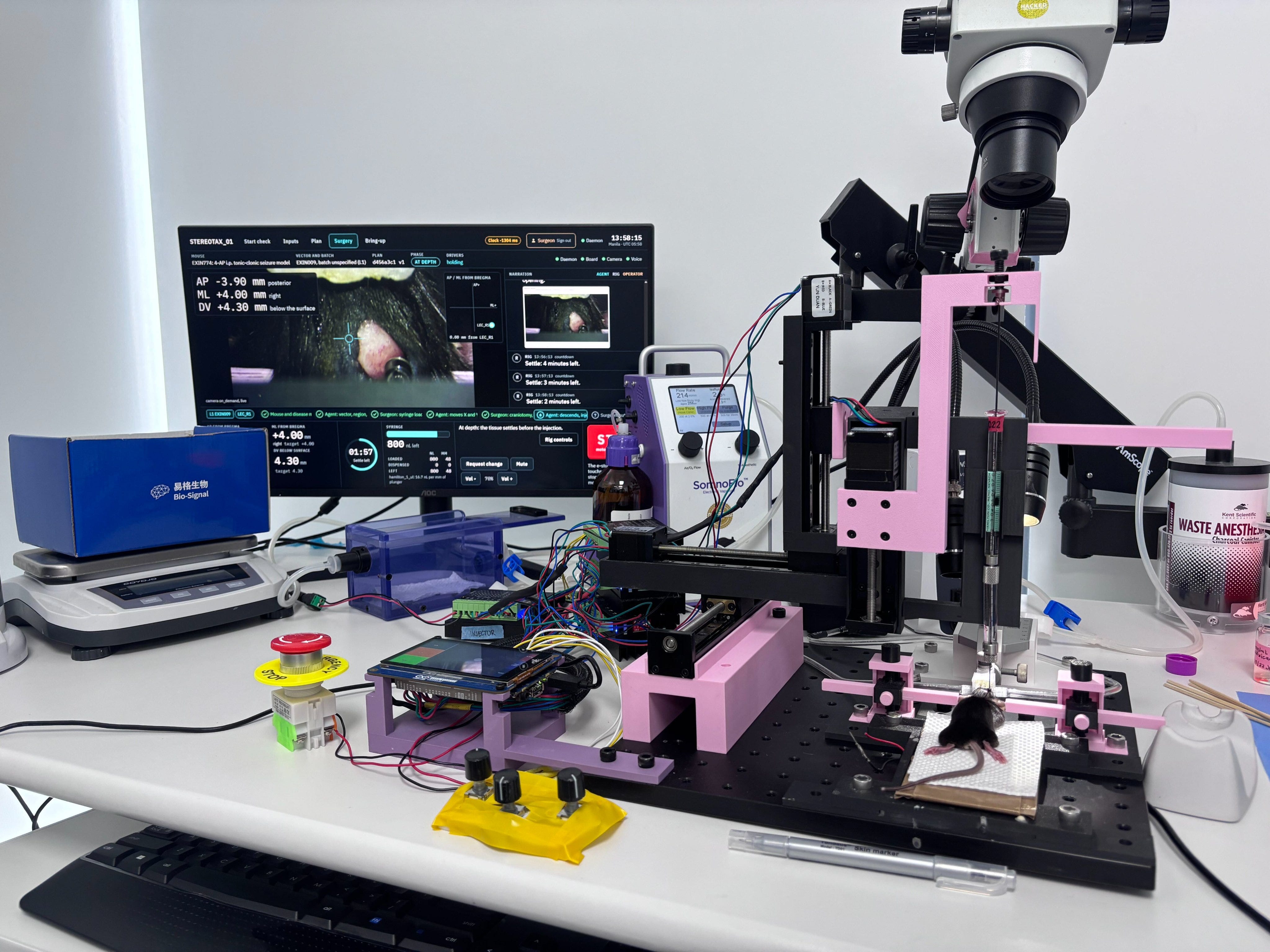
Anthropic's Claude generated 35,000 antibody designs in one month for food allergies (three outperformed standard drugs), redesigned CAR-T therapy components 70% shorter with 10x receptor expression, and cut manufacturing document review time by 89% while catching seven issues humans missed. The company acquired Mithril Medicine (a one-person biotech that took a muscular dystrophy treatment from idea to promising mouse results in 18 months) and partnered with six organizations to run drug programs end-to-end. This signals meaningful speedups across the entire drug development pipeline—discovery, manufacturing, and trials—not just isolated proof-of-concept wins.