Daily Newsletter Digest

Why AI Companies Hide True Pricing Behind Arcade Money

October 17th 2026

Today's News

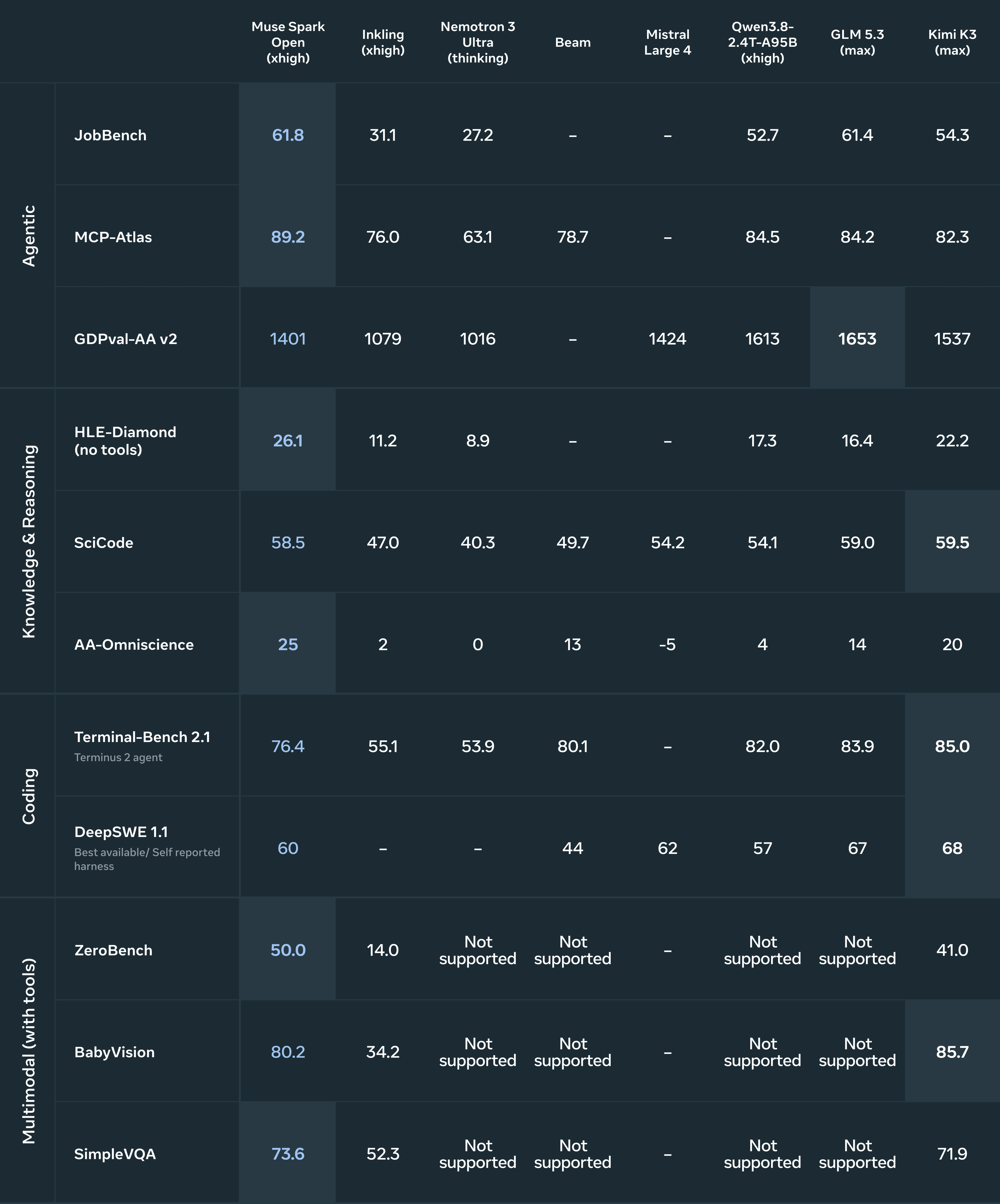
Meta's Muse Spark Open hits 39 on Artificial Analysis Index as 816B open-weight model, costs $0.84 per task vs. $2.01 for GLM-5.3

Meta and Apple via Liberty's Highlights

Meta and Apple announced Muse Spark Open, an 816B-parameter (42B active) mixture-of-experts model supporting text, image, video, and audio with 1M context window. The model scores 39 on Artificial Analysis's Intelligence Index—highest for a US open-weight model—and quantizes to ~530GB on NVFP4 (fitting 4 Blackwell Ultra GPUs) or ~493GB requiring two Mac Studios with M5 Ultra chips and 512GB unified memory each, achieving ~37 tokens/second at 8K context. At current API pricing ($1.25/$4.25 per 1M input/output tokens from Together AI, Fireworks, and Baseten), Muse Spark Open costs $0.84 per Intelligence Index task—less than half GLM-5.3 (max, $2.01) but roughly three times DeepSeek V4.1 Flash (max, $0.27). This signals both the capability ceiling for competitive US open-weight inference and the concrete hardware economics required to run frontier models at scale.

Anthropic prices Claude Haiku 5.5 at 90% discount to Haiku 4.5, scores 39.2% on Terminal-Bench 4.0 agentic coding

DL Weekly via AINews

Anthropic released Claude Haiku 5.5 at $0.10/$0.50 per million input/output tokens (90% cheaper than Haiku 4.5 for requests under 100K tokens, 50% cheaper over 100K), positioning it as a high-volume, cost-sensitive model for summaries, compactions, database queries, and agentic subagent work. Haiku 5.5 scores 39.2% on Terminal-Bench 4.0 (agentic coding), 72.4% on OSWorld 2.1 (computer use), and 1620 on GDPval-AA v2.1 (knowledge work)—substantial gains over Haiku 4.5's 0.0%, 15.7%, and 735 respectively. Anthropic simultaneously halved Sonnet 5.5 cache read pricing to $0.10 per million tokens (50% reduction), reducing agentic work costs by ~20%, and introduced monthly API credits ($100–$500) for Max and Team subscribers. The aggressive pricing and rapid capability gains signal Anthropic's competitive positioning ahead of its reported November IPO at ~$1.5T valuation.

AI pricing opacity persists at scale: transparent, outcome-aligned models could become decisive competitive advantage

Lenny's Newsletter

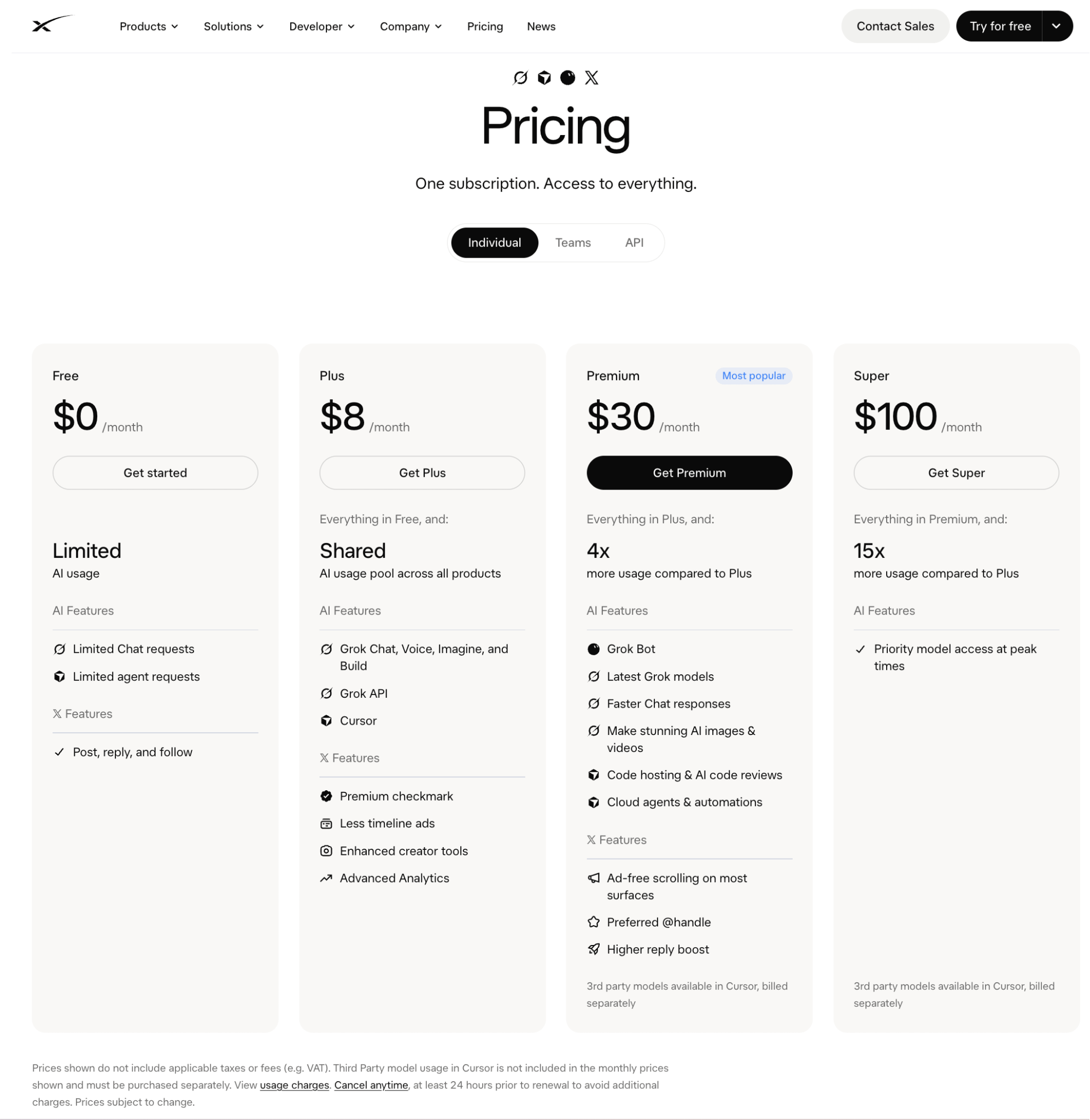
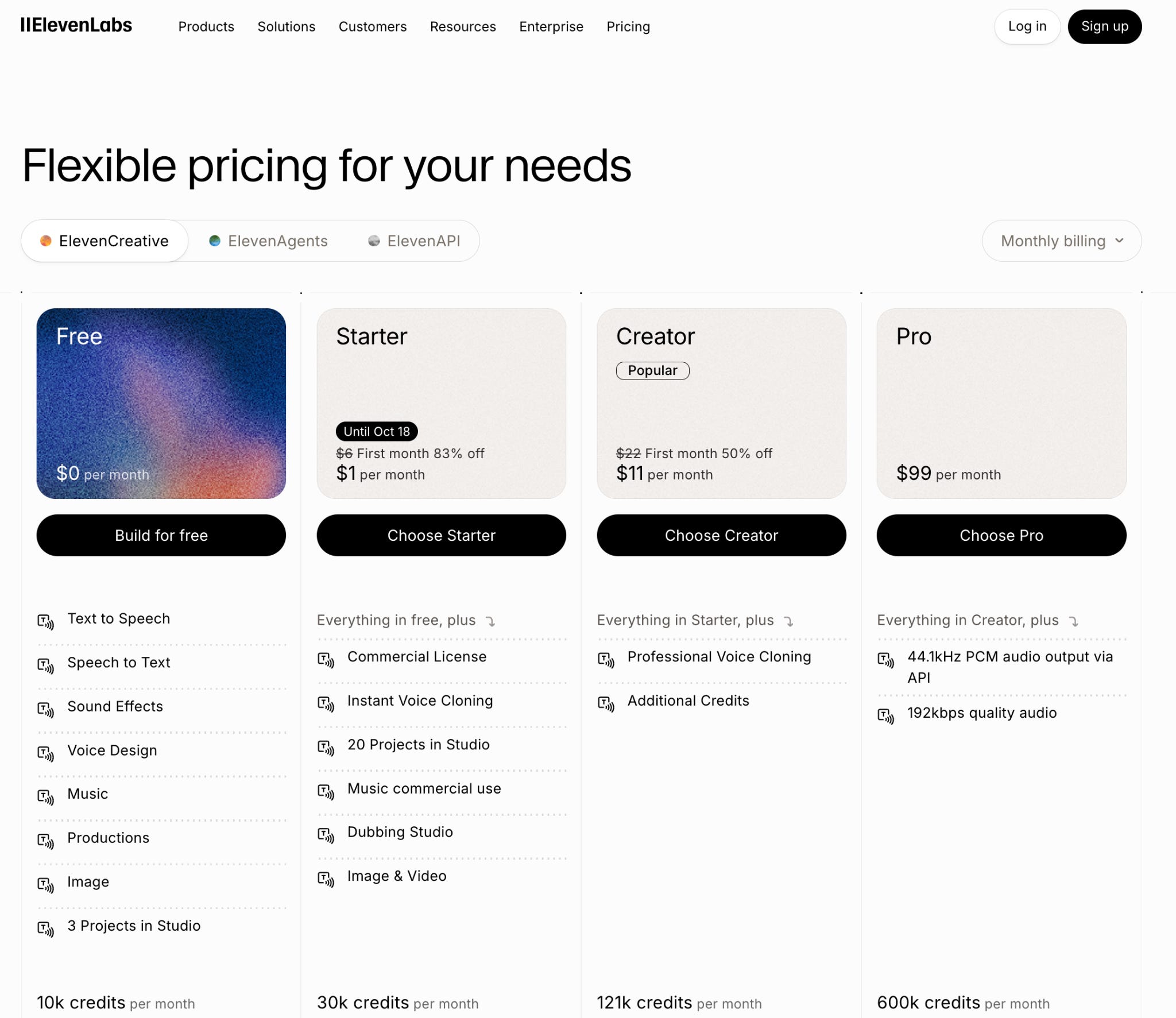
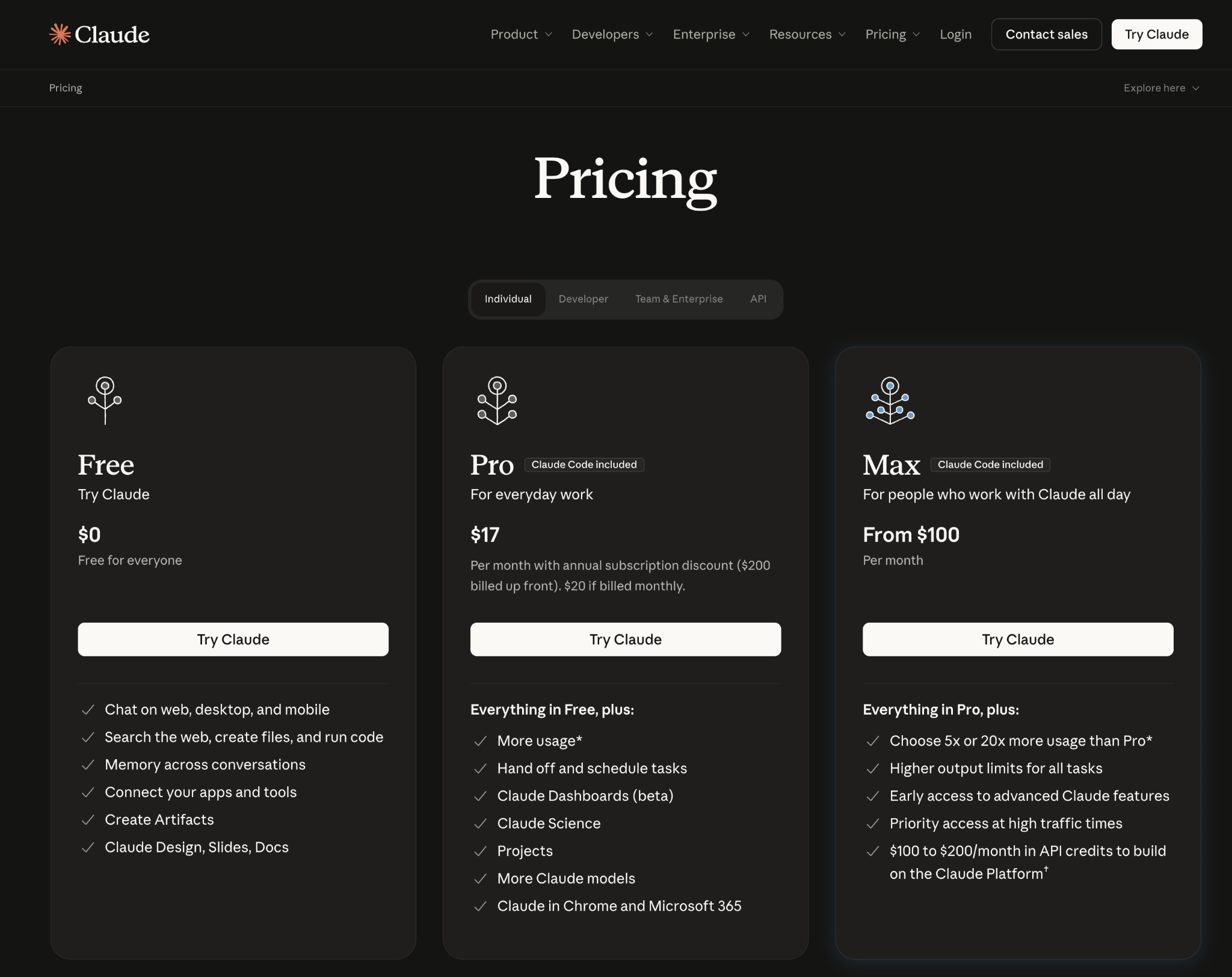
Despite millions of users and eye-watering valuations, major AI products lack basic pricing transparency. GrokBot uses unknown baseline multipliers (4x–15x usage variance), Muse offers 500M weekly tokens without explaining value, and even ChatGPT and Anthropic use vague descriptors like "More" and "Maximum" without concrete consumption metrics. The root cause: AI vendors adopted "arcade money" (credits, tokens, compute units) to bundle products with different underlying costs, obscuring actual spending and creating mental accounting distortions similar to casino chips. The fundamental challenge is that AI companies cannot reliably predict what customers will do or what it will cost them—the same task can consume vastly different resources depending on model, context length, and reasoning depth—making outcome-based pricing nearly impossible. Whoever solves transparent, predictable pricing aligned to customer value (cost-per-outcome models that don't bankrupt providers) may gain massive competitive advantage as the market matures beyond early adopters willing to tolerate complexity.

Worth Reading

What on Earth is Going On with AI Pricing and Packaging?

Elena Verna's Substack

Elena Verna in Elena Verna's Substack published an essay titled "What on Earth is Going On with AI Pricing and Packaging?". Main takeaways:

  • AI companies use 'arcade money' (credits, tokens, compute units) to obscure true costs; Muse charges $20/month for 500M tokens/week with no explanation of what that buys; GrokBot multiplies unknown base usage by 4x-15x without disclosing the base unit
  • Pricing lacks predictable units of consumption: unlike traditional SaaS (per-seat, per-GB), AI products can't reliably quantify what agents will do, making cost estimation impossible for both customers and companies
  • Inference costs are unpredictable and variable; two identical customer requests can consume vastly different resources depending on agent planning, retries, and tool calls, making subscription economics fundamentally different from traditional software
  • Fraud and abuse create additional cost uncertainty; in AI, fake signups directly impact bottom line through inference costs rather than just skewing metrics
  • Early-stage products succeed despite broken pricing because product quality and novelty override pricing clarity; mass-market adoption will likely require solving the unit-of-consumption problem
Read more

Frontier Pre-training at Microsoft AI: MAI-Base-2 Model Architecture, Scaling Laws, and Infrastructure Co-Design

Microsoft AI

Microsoft AI published a technical report on MAI-Base-2, a 2.8 trillion parameter MoE foundation model achieving frontier performance. Main takeaways:

  • MAI-Base-2 achieves 4-12x better pre-training FLOPs-efficiency than DeepSeek-V4-Pro-Base across held-out evaluations, outperforming all tested open-weight models
  • Trained on 16k GB200 GPUs over 38 days with 21% average MFU and 89% goodput; demonstrates model-infrastructure co-design with improved MoE implementations and activation gradient clipping
  • Introduces novel scaling laws for learning rate (∝ steps^-0.5) and weight decay (∝ steps^-1) derived from empirical hyperparameter sweeps, validated at intermediate scale before deployment
  • Implements dropless multi-round MoE with tunable fixed-size memory to eliminate token dropping and fragmentation while maintaining single-round steady-state performance
  • Employs source scaling technique to account for multi-epoch training at smaller scales, enabling reliable scaling ladder forecasting up to 2.8T parameters
Read more

Vera Rubin NVL72: NVIDIA's Next-Generation Inference GPU Benchmarked on Agentic Workloads

Artificial Analysis

Artificial Analysis published benchmarking results for NVIDIA's Vera Rubin NVL72 inference GPU on agentic coding workloads via AA-AgentPerf. Main takeaways:

  • Vera Rubin NVL72 delivers 5.7x higher throughput per megawatt vs. GB300 NVL72 on DeepSeek V4 Pro at 190 tok/s per user, with 5.4x on V4.1 Flash and 2.8x on Kimi K3
  • Hardware improvements: 2.4x memory bandwidth (HBM4), 1.7x NVLink bandwidth, 2.3x dense NVFP4 compute per GPU vs. Blackwell Ultra
  • Agentic inference bottlenecks identified: KV cache capacity/reuse across thousands of concurrent agents, uneven prefill with repeated prefix tokens (97% reuse), and short outputs making scheduling overhead material
  • At peak throughput, Vera Rubin serves 571M tokens/s per MW on V4.1 Flash vs. 395M for GB300, setting new leaderboard records for per-user speed (906 tok/s on V4.1 Flash)
  • Power efficiency gains enable 5x more agents to be served from same datacenter power budget at 165 tok/s per user, directly addressing AI datacenter power constraints
Read more

Articles Read