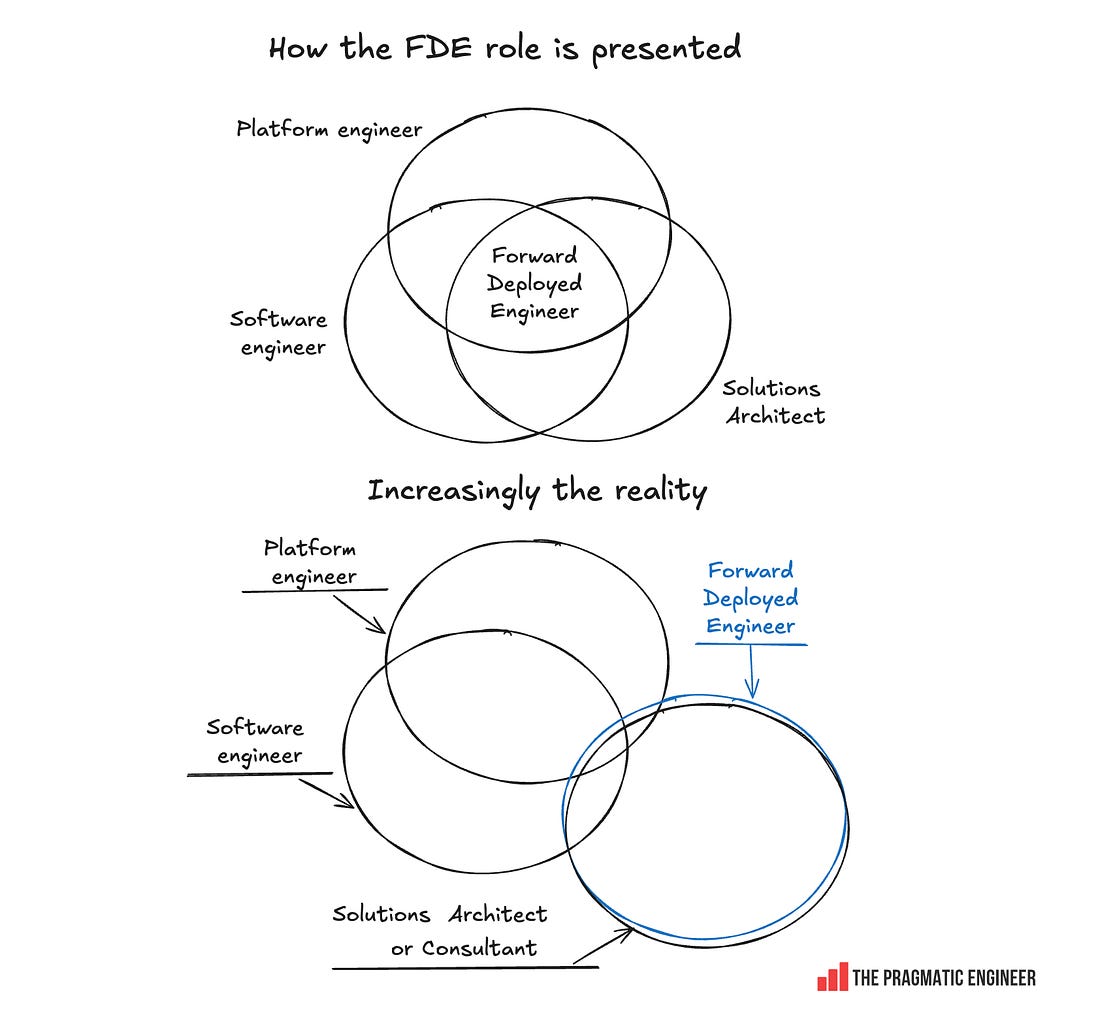
OpenAI created a standalone Deployment Company backed by $4B in initial capital from TPG, Advent, Bain Capital, and Brookfield, acquiring UK-based Tomoro to immediately add ~150 experienced Forward Deployed Engineers. The move signals that major AI labs now view rapid enterprise deployment as a critical competitive lever for token consumption and revenue growth. The Deployment Company will embed FDEs into customer organizations to redesign workflows around frontier AI capabilities, with the partnership spanning 19 leading investment firms, consultancies (Bain, McKinsey, Capgemini), and system integrators. This represents a structural shift: as models become more capable, the bottleneck has moved from model capability to enterprise adoption and workflow integration.
Daytona's January 2025 pivot from developer tooling to AI agent compute proved prescient, with the company now reporting 74% month-on-month growth and 850K daily sandbox runs. Customers are demanding API access immediately after demos, and RL/eval workloads have grown from 0% to ~50% of usage in months. The shift signals rapid market validation for stateful, composable sandbox infrastructure as a critical layer in the emerging agent stack—agents require always-on, scalable compute that cannot be paused or limited to local machines.
Synopsys completed its $35B Ansys acquisition in July 2025, projecting $400M cost synergies by year 3 and $1B+ annual revenue synergies long-term. The deal expands the addressable market from $18B (EDA+IP) to $31B by adding simulation and systems software, eliminating the only adjacent market that could have challenged the Big-3 oligopoly. Synopsys ($8B revenue), Cadence ($5.3B), and Siemens ($2.2-2.5B) now control 85%+ combined market share with 100% dominance at advanced nodes through tool-flow lock-in: Synopsys holds 90%+ in signoff (PrimeTime), Cadence 55-60% in hardware emulation (Palladium), and Siemens 85%+ in physical verification (Calibre).
EDA vendors are growing 12-15% CAGR while semiconductor R&D grows 7%, driven by verification intensity (now consuming 65-70% of design time), AI tool premiums (~20% revenue uplift), and token-based licensing that decouples pricing from headcount. This creates a self-reinforcing renewal machine: 95%+ customer retention, 3-7% annual contractual escalators, and 3-5x consumption spikes from AI-accelerated design iterations. Sequential pipeline dependencies make tool switching prohibitively expensive; $11.4B Synopsys and $7.8B Cadence backlogs provide 1.5-1.6 years of forward revenue visibility.
OpenAI's Q1 revenue exceeded Anthropic's by ~$1B, reaching $5.7B, though the company faces significant profitability challenges with a -122% operating margin. In contrast, Cursor has rapidly scaled to $3B annualized ARR while maintaining a viable high-margin SaaS model, with 3,000+ customers spending $100K+ annually. The divergence signals that while frontier model providers struggle with unit economics at scale, specialized AI coding tools are capturing strong enterprise demand and demonstrating sustainable business models in the AI stack.
TurboPuffer crossed $100M run-rate in March 2025, just 19 months after raising $1M, while maintaining profitability—a rare signal of sustainable unit economics in AI infrastructure. The company's thesis centers on retrieval and search as the critical bottleneck for frontier AI teams. Separately, Modal closed a $355M Series C at $4.65B valuation focused on rebuilding the cloud stack for AI workloads, while Exa raised $250M at $2.2B. Both companies are winning as agents and frontier teams demand purpose-built compute infrastructure optimized for inference, evals, and retrieval workloads rather than traditional cloud abstractions.
Public neocloud companies CoreWeave, Nebius, and IREN are trading at approximately $90B enterprise value per live GW of capacity, establishing a concrete pricing benchmark for AI infrastructure buildout. This valuation framework matters because it provides a quantifiable basis for estimating the $13.5T in enterprise value creation expected across 150GW of new capacity by 2030.
SpaceX's S-1 filing reveals the company created a ~$15B/year business line renting ~500MW of Colossus capacity to Anthropic in just months—nearly matching SpaceX's total 2025 revenue of $18.7B. This demonstrates the revenue potential of neocloud infrastructure at scale, with SpaceX commanding premium rates of $30M/MW despite typical neocloud pricing at $10-12M/MW. The signal is clear: the market opportunity is real and immediately monetizable at scale.
I read the full release. Main takeaways:
- OpenAI is launching a standalone Deployment Company (majority-owned by OpenAI) with $4B initial investment, acquiring Tomoro to bring ~150 Forward Deployed Engineers in-house on day one.
- The DeployCo is backed by 19 partners including TPG (lead), Bain Capital, Brookfield, plus consulting firms (Bain, McKinsey, Capgemini), giving it access to 2,000+ sponsored businesses and deep enterprise transformation expertise.
- FDEs will embed directly into customer organizations to redesign workflows around AI, moving from use-case identification through production deployment, connecting OpenAI models to customer data/tools/processes.
- The structure keeps customers connected to OpenAI's frontier research and product roadmap, allowing them to "build for where OpenAI's frontier capabilities are headed" rather than current-state models.
- This represents OpenAI's competitive response to Anthropic's parallel enterprise AI services company (announced May 2026), both competing for mid-market deployment capacity and systems integration leadership.
I read the full interview. Main takeaways:
- Nvidia has "largely conceded" China's AI chip market to Huawei due to U.S. export restrictions; Huang expects "nothing" regarding future approvals to sell advanced chips to China.
- Nvidia Q1 FY2027 data center revenue surged 85% YoY to $81.62B; company announced $80B share buyback and raised dividend despite China market closure.
- China previously represented at least one-fifth of Nvidia's data center revenue; Trump administration licensing requirement in April effectively shut out the market.
- Reuters reported some Chinese firms (Alibaba, Tencent, ByteDance, JD.com) received H200 approval, but U.S. trade representative indicated chip controls were not discussed in recent China summit talks.
- Huang framed Nvidia's growth strategy around "five-layer cake" (energy, chips, infrastructure, models, applications) and prioritized supply chain support over shareholder returns amid "hundreds of billions of dollars" growth.
I read the full essay. Main takeaways:
- US manufacturing excels at high-volume static products but struggles with low-volume custom parts due to high white-collar soft costs that cannot be amortized across few units.
- New digitized end-to-end manufacturers (some unicorn-valued) eliminate soft costs and drastically shorten lead times via instant quoting and production-integrated software, creating a superior business model.
- US labor cost structure (high skilled wages, relatively low unskilled wages) makes robot adoption economically irrational vs. China, limiting automation adoption despite alarmist comparisons.
- Intermediate goods sector contains most value-add leverage in supply chains; consolidation toward larger digitized firms will reshape this layer.
- AI accelerates these new manufacturing models; flexible low-volume production strengthens US technological resilience and military procurement efficiency.