Anthropic is addressing explosive demand growth by leasing xAI's 300-megawatt Colossus facility after experiencing 80x growth in Claude usage versus the 10x it had planned for, signaling severe inference capacity constraints across the frontier lab ecosystem. Simultaneously, Anthropic announced a new enterprise AI services company backed by Blackstone, Hellman & Friedman, Goldman Sachs, General Atlantic, Leonard Green, Apollo Global Management, GIC, and Sequoia Capital. The services firm will deploy Applied AI engineers from Anthropic alongside customer engineering teams to build custom Claude solutions for mid-sized enterprises—a recognition that complex organizations require professional services and managed deployment rather than self-service API access. This dual move reflects both the infrastructure bottleneck constraining deployment and revenue realization, and a fundamental shift in how frontier labs monetize beyond direct API sales.
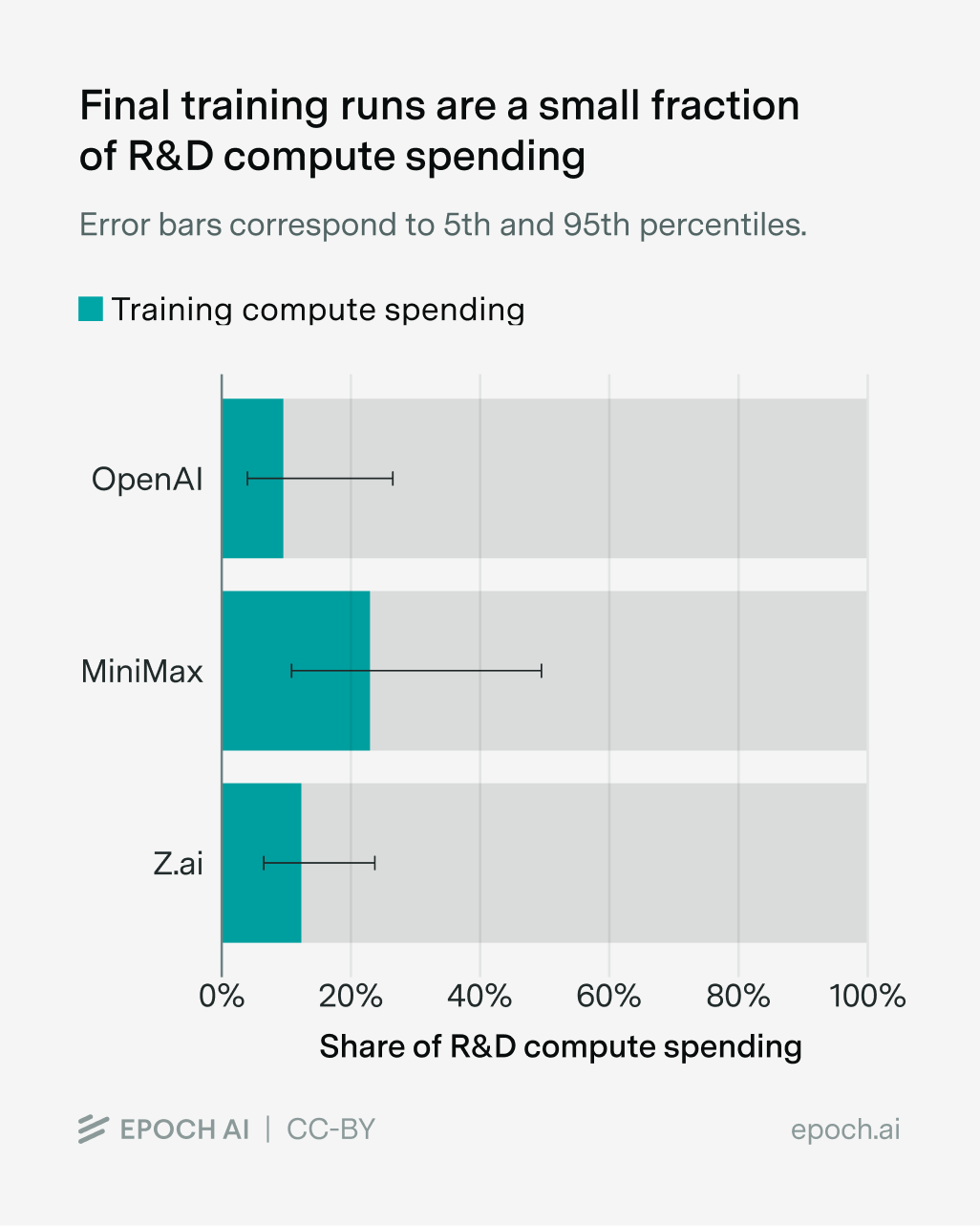
Research from AI2 and Epoch AI shows roughly 80% of compute spending on frontier models goes to research and development rather than final model training, with meaningful error bars around the estimate. In an open-first ecosystem like China's, where leading labs rapidly share knowledge and avoid duplicate R&D effort, this cost structure creates a potential meaningful advantage that could sustain longer development cycles than Western observers expect. The finding fundamentally reshapes understanding of why China's distributed, collaborative approach to frontier model development may prove more resilient and cost-efficient than centralized Western labs operating in isolation.
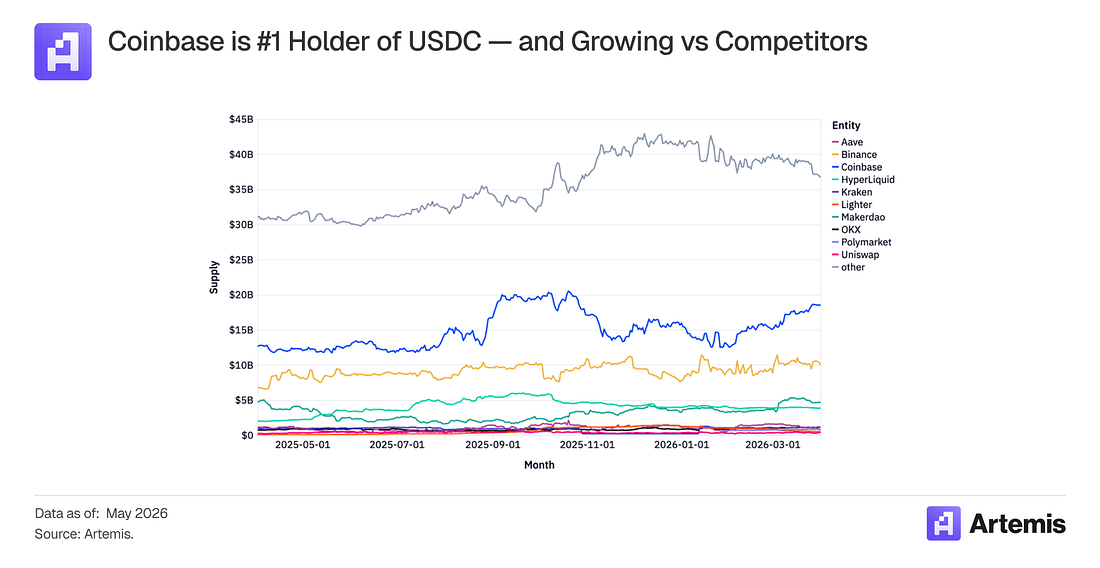
Coinbase holds $19 billion in USDC on-platform (an all-time high) and has grown its revenue share from Circle from 17.8% in Q1 2022 to roughly 50% in recent years, effectively capturing issuer-like economics without issuer overhead. The Collaboration Agreement auto-renews in 3-year terms and cannot be terminated if three thresholds are met, functioning as a continuation lock rather than a renegotiation cliff—meaning Coinbase controls renewal terms and the upside flows directly through the same contractual share as stablecoin adoption scales. As stablecoins are projected to reach $3 trillion by 2030 (up from ~$300 billion today), Coinbase's structural position in USDC distribution, Base settlement, and agentic commerce (92.8% of real agentic payment volume on Base, 99.8% settled in USDC) positions it to compound its infrastructure economics regardless of regulatory or competitive shifts.
Anthropic updated its terms of service to void third-party sales of its private stock, including tokenized shares and SPVs, naming eight unauthorized trading firms (Open Door Partners, Unicorns Exchange, Pachamama, Lionheart Ventures, Hiive, Forge, Sydecar, and Upmarket). Secondary market venues like Jupiter's PreStocks were implying a $1.5 trillion valuation—nearly 4x Anthropic's $380 billion post-money valuation from February—exposing a significant pricing integrity problem in on-chain private equity markets. The disconnect highlights that illiquid assets require different valuation methodology than liquid cryptocurrencies, and raises questions about whether tokenized equity markets will develop on authorized rails with proper pricing infrastructure or remain fragmented across unregulated venues.
Anthropic is in advanced talks to raise $30 billion to $50 billion at a valuation up to $950 billion, while simultaneously acquiring Stainless (a developer infrastructure company) for $300 million or more. The funding round represents a substantial capital infusion and valuation increase, while the Stainless acquisition signals Anthropic's strategy to build developer tooling and distribution infrastructure around Claude. Together, these moves reflect intensifying competition for AI model distribution and developer ecosystems as frontier labs recognize that API access alone is insufficient to capture enterprise value.
OpenAI's revised payment terms with Microsoft reduce the revenue-sharing cap from $135 billion to $38 billion through 2030—a $97 billion reduction in Microsoft's long-term financial exposure. In parallel, OpenAI holds approximately $2.6 billion in equity stakes in CoreWeave and Cerebras from infrastructure commitments, creating complex competitive incentives across the AI hardware and cloud provider stack. These arrangements reveal how frontier labs are structuring relationships with hardware and compute suppliers, using equity stakes to align incentives while simultaneously reducing cash obligations to cloud partners—a strategy that reshapes the economics of AI infrastructure buildout.
Researchers at OpenAI, Microsoft, Broadcom, AMD, and Nvidia have developed Multipath Reliable Connection (MRC), a new network protocol that increases switch radix and flattens AI cluster topology to reduce latency, cost, and power consumption. MRC borrows ideas from the Ultra Ethernet Consortium specification and extends RoCE (RDMA over Converged Ethernet) with adaptive load balancing, packet trimming, and IPv6 segment routing. The protocol enables a two-tier network to connect 131,072 compute engines with the same bandwidth per device as a traditional three-tier network connecting 65,536 engines—doubling capacity with only 20% more switches and reducing maximum hop count from five to seven to three. This signals competitive pressure on networking vendors and reflects the infrastructure arms race among hyperscalers building out AI capacity at scale.
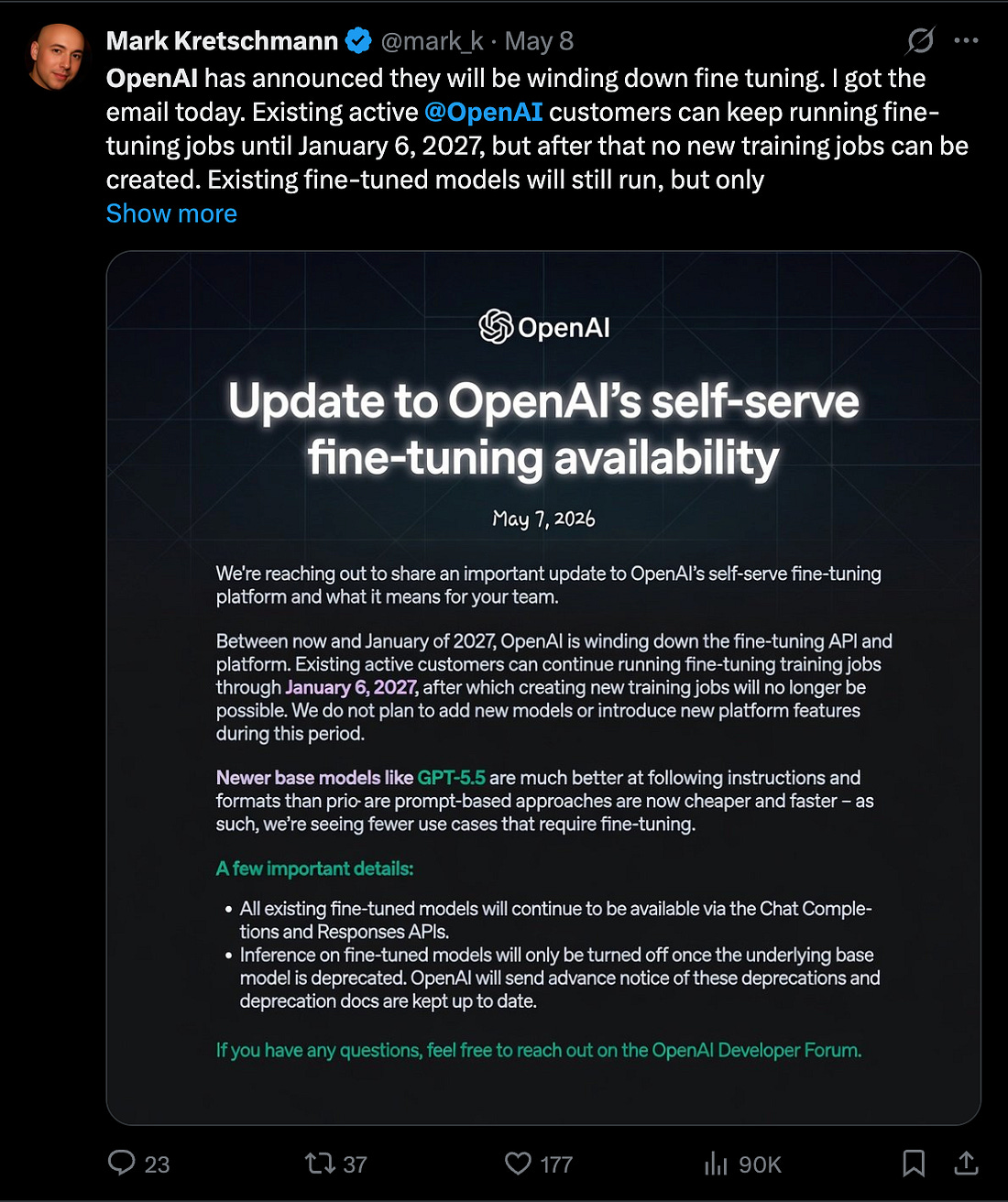
OpenAI is sunsetting its finetuning APIs after years of promoting finetuning as a cost-effective way to achieve frontier model performance, with a January 2027 deadline for deprecation. This marks a significant shift in the AI engineering toolkit and reflects either GPU constraints or a fundamental change in how the industry approaches model customization—suggesting that frontier model capability has advanced to the point where finetuning no longer delivers meaningful performance gains over prompt engineering and in-context learning.
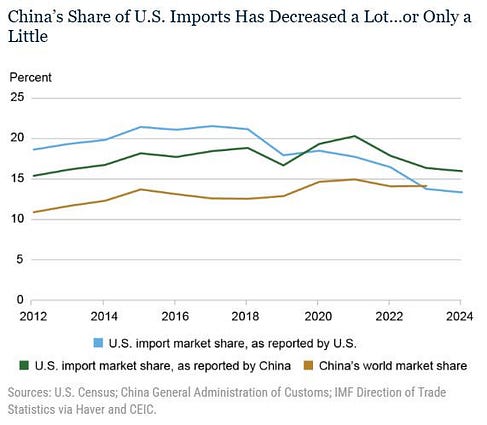
Real trade data shows American imports from China have plummeted from 21% of total U.S. imports to 15%, with most production shifting to Vietnam, Mexico, and other Southeast Asian nations rather than being hidden through transshipment schemes. This validates that Trump's tariff strategy actually worked to break the old outsourcing model, though the shift is slower than headline numbers suggest and reflects genuine supply chain restructuring rather than tariff avoidance.
I read the full essay. Main takeaways:
- OpenAI lacks unique technology or durable competitive moat; ~6 organizations ship equivalent frontier models with no known mechanic for self-reinforcing market share (unlike Windows, Google Search, iOS).
- ChatGPT's 800-900M user base has shallow engagement: 80% of users sent <1,000 messages in 2025 (~3 prompts/day average), with only 5% paying—usage is "a mile wide but an inch deep" with no clear product-market fit.
- Market share is shifting to incumbents (Google, Meta) leveraging distribution; Gemini and Meta AI gaining rapidly despite undifferentiated products, mirroring Netscape/IE browser wars where distribution won despite technical parity.
- OpenAI's core strategic problem: it cannot invent all new AI experiences/use cases itself, yet most future value will come from experiences not yet invented by thousands of entrepreneurs—unclear how to compete with "this chart" of Silicon Valley builders.
- Sam Altman's recent activity (app platforms, browser, video, capex announcements, platform strategy) appears to be trading equity for durable strategic positions before competitive dynamics harden.
I read the full report. Main takeaways:
- Final training runs represent only 9.6% of OpenAI's R&D compute (2024), 22.6% for MiniMax, and 12.3% for Z.ai—the bulk goes to experiments, synthetic data, and failed runs
- MiniMax's higher training-to-R&D ratio (22.6%) aligns with catch-up dynamics: lagging companies should need less experimentation if learning from frontier work
- Chinese IPO disclosures (MiniMax, Z.ai) enabled first comparative analysis beyond OpenAI; pattern holds across different scales, countries, and business models despite wide uncertainty bands
- R&D compute spending measured in dollars, not FLOP—actual exploration may use fewer FLOP due to lower GPU utilization than optimized training runs
- Frontier companies face many plausible research directions requiring heavy experimentation; competitors learning what works should theoretically allocate more compute to training vs. exploration
I read the full interview transcript. Main takeaways:
- Jeremy Howard, creator of ULMFiT, now argues fine-tuning as a separate stage is fundamentally wrong; advocates for "continued pre-training" that mixes all data types (instructions, code, documents) from the start to avoid catastrophic forgetting and alignment failures
- CodeLlama example: fine-tuning on 500B code tokens made the model better at code but worse at generic tasks LLaMA2 previously solved well, illustrating the capability degradation problem
- Howard claims many current "alignment tax" issues stem from poor training practices (separate pre-training/fine-tuning stages) rather than fundamental alignment challenges
- Fast.ai's philosophy: build for GPU-poor users (most people lack massive compute), not just elite labs; this constraint-driven approach has historically surfaced non-consensus ideas like transfer learning that later became standard
- Open questions remain unsolved: how to fine-tune properly, why models memorize datasets after single epoch, how to avoid catastrophic forgetting—suggesting current industry practices lack rigorous understanding
I read the full report. Main takeaways:
- OpenAI, Microsoft, Broadcom, AMD, and Nvidia released Multipath Reliable Connection (MRC), a new Ethernet protocol that increases switch radix (512 ports at 100 Gb/sec vs. 64 ports at 800 Gb/sec) to enable 2-tier instead of 3-tier cluster topologies, doubling compute capacity from 65,536 to 131,072 endpoints with only 20% more switches.
- MRC uses eight independent Clos data planes with adaptive load balancing and packet trimming to tolerate link failures gracefully; a single link loss reduces bandwidth by only 12.5% and training continues without checkpoint restart, unlike traditional RoCE Ethernet.
- MRC reduces maximum switch hops from 5-7 to 3, lowering latency, cost, and power consumption; deployed on Oracle Stargate (Abilene, TX) and Microsoft Azure AI (Fairwater, WI) with Nvidia ConnectX-8, AMD Pollara/Vulcano DPUs, and Broadcom Thor Ultra SmartNICs.
- Protocol pairs IPv6 segment routing with static routing across eight links per endpoint, eliminating need for dynamic routing; adaptive load balancing via ECN and packet trimming reduce congestion variation critical for synchronous training.